Herms
Herms
Ah, the herms! They are, in a very literal sense, the reason I am here. One moment, I was sauntering through a particularly porous bit of spacetime, and the next? face to face with a face. There it was: a weathered sentinel from antiquity, staring back at me with blank, marble eyes. I placed a hand upon it and saw centuries of art reflected in its crude surface. From the sublime David, emerging from a single strike of a stone carved by an overly enthusiastic yellow cartoon sponge, to the ominous austerity of Tony Smith’s Die; I was, as you say, smitten.
In their classical form, a herm is a rectangular stone pillar, often rough-hewn, featuring a carved portrait and explicit genitalia as its only rendered details. These objects were not mere decoration; they served as practical road markers, boundary stones, and guardians of thresholds in Ancient Greece and Rome. Their power lies in this duality: They are at once functional, bodily, and profoundly symbolic.
My fascination stems from their uncanny resonance across time. They feel instantly familiar as archetypal sculptures, echoing the reductionist forms of 20th-century minimalism while remaining inescapably, humorously human.
Above all, their association with the crossroads — liminal spaces, boundaries, portals — that makes them such potent vessels for my work. They are anchors between states: past and present, sacred and profane, body and symbol, mundane and magical. In my hands, they become contemporary markers for personal and collective boundaries, exploring themes of memory, trauma, identity, and the thresholds we can or cannot cross.
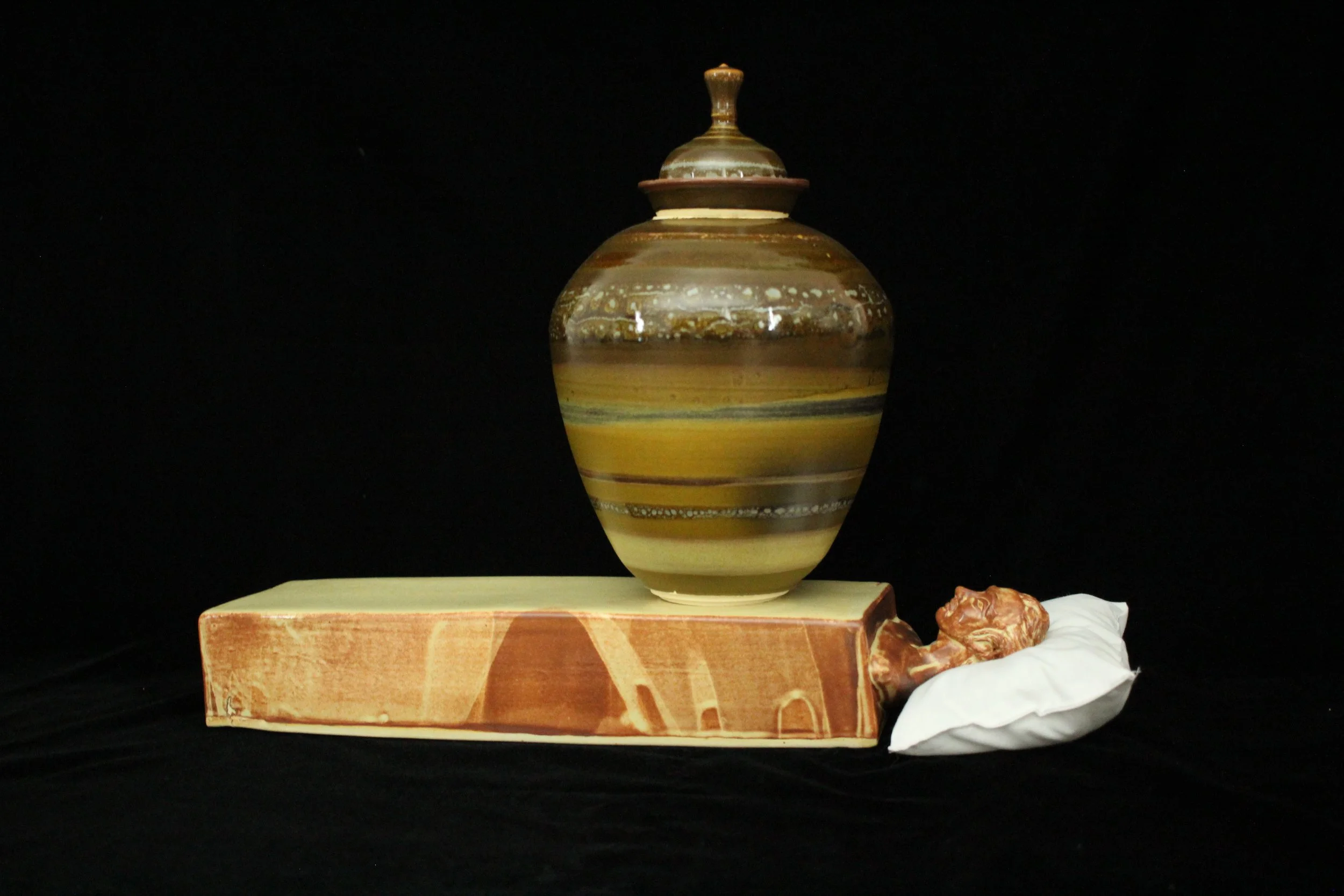
Wait weight (Herm 01)
2023
18” x 21” x 8”
Glazed Stoneware, doll pillow
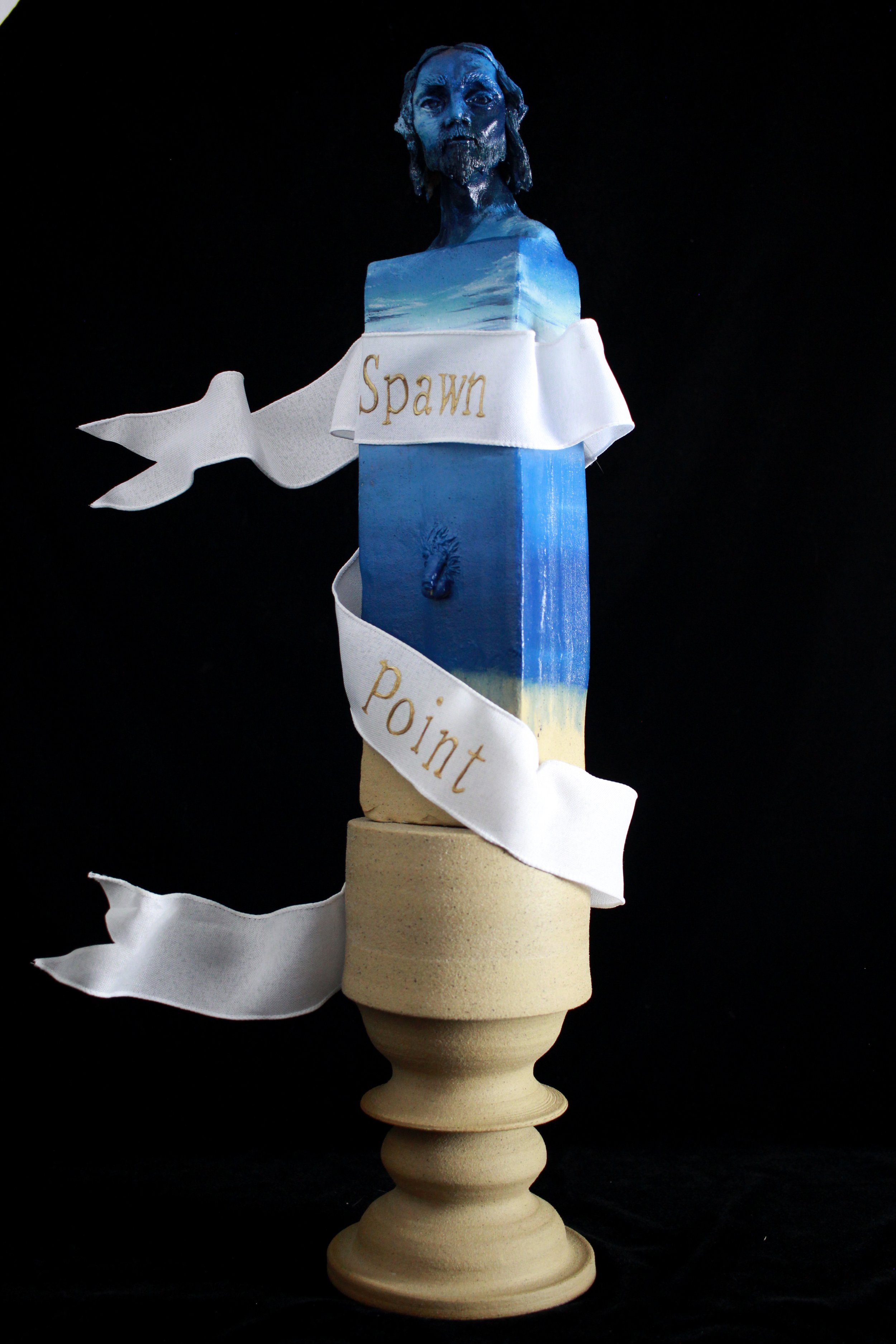
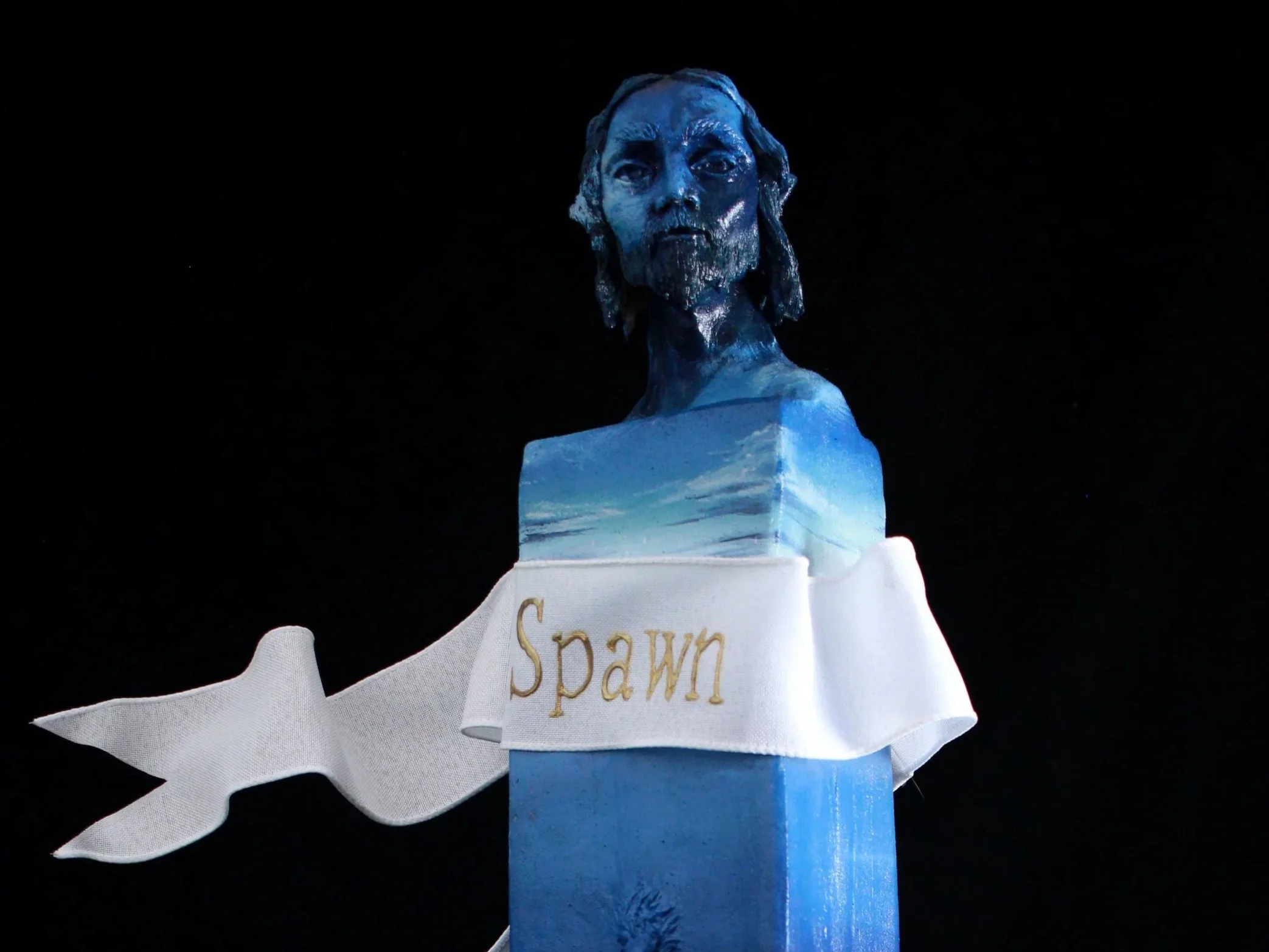
The question isn't where, it's when? (Herm 02)
2025
28" x 12" x 12
Oil Painted Stoneware, Linen Ribbon, puff-paint